Season snacks planner: how to plan seasonal snacks year-round
Key Takeaways
A season snacks planner can make family snack choices feel easier without turning them into another complicated routine. I use a simple plan to keep seasonal produce, busy sport days and the realities of family life in view.
- Start with produce that is available locally, then build around familiar foods.
- Plan for weather, activities and changing weekly routines.
- Keep a mix of fresh, filling, portable, homemade and store-bought choices.
- Make practical substitutions when ingredients or plans change.
- Review what gets eaten, what gets left over and what is worth repeating.
What a season snacks planner can help you do
As a dad raising sporty kids, I find that snacks can disappear quickly on busy afternoons, especially when training or a game is on the schedule. A season snacks planner gives me a place to think ahead without deciding every detail weeks in advance. It can connect what is available, what my family likes and how much time I have. The aim is a useful rhythm, not a perfect menu.
Match snack choices to what is in season
Seasonal produce gives me a natural starting point, though what is available can vary by region, shop and year. I might plan around fruit that looks good at the market, then pair it with a familiar option such as yoghurt, crackers or a sandwich. This keeps the plan grounded in what I can actually find rather than an idealised list. A season snacks planner works best when it leaves room for local availability.
Reduce last-minute decisions and food waste
A little planning can spare me the familiar scramble of looking through the fridge just before we head out. I check what we already have, choose a few likely snack options and make a note of anything that needs using soon. That doesn’t mean every item gets assigned to a particular day; it simply makes it easier to use what’s on hand. A flexible plan beats a rigid one when family schedules shift.
Balance convenience, nutrition, and variety
I try to include choices that are easy to pack alongside snacks that work well at home. A piece of fruit may suit a quick stop, while toast or a small homemade muffin might be more practical after an active afternoon. I don’t expect every snack to do everything. A mix of tastes, textures and levels of effort makes the plan more useful over a full week.
How to map snacks across the seasons
I map the year by noticing what changes, rather than trying to predict every meal months ahead. Weather affects whether I reach for something cool and easy to eat outside or a snack that travels well in a bag. School terms, sport timetables and family weekends shift too. A broad seasonal outline gives me direction, while the week-to-week plan handles the details.
Note seasonal produce and local availability
I keep a short note of produce that is showing up regularly and appealing to the family. There’s no need to treat a season chart as a strict rule: growing conditions and local supply can differ, and shops may have a wider selection year-round. I use the table as a prompt for what to look for, then check what is actually available nearby.
| Season | A planning prompt | How I might use it |
|---|---|---|
| Summer | Look for fruit that is easy to chill and pack | Pair it with a simple snack for a warm day out |
| Autumn | Notice produce that suits a lunchbox or afternoon at home | Add it to a familiar snack combination |
| Winter | Think about options that travel well in cooler weather | Keep a few easy choices ready for busy days |
| Spring | Check what fresh choices are appearing locally | Try one new option alongside a family favourite |
This is a starting point, not a shopping instruction. I can swap any idea for what looks fresh, fits our budget and is convenient to carry. The useful habit is checking availability before I build the week around a particular ingredient.
Plan for weather, activities, and changing routines
I look at the family calendar before settling on snack ideas. A long drive to a game calls for a different kind of packing than an afternoon at home, and hot weather may make some foods less convenient to carry. I also leave room for the ordinary changes: training moves, a child comes home hungry, or the weekend turns out differently than expected. A plan that reflects the week we have is more likely to be used.
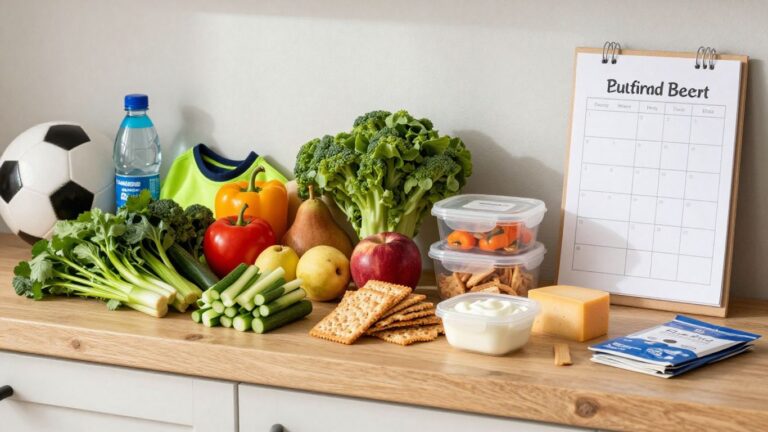
Use a monthly or weekly planning schedule
A monthly view helps me notice the season and any predictable changes, but I make most choices week by week. I can jot down a few snack themes for the month, then check the fridge and family calendar before shopping. That keeps the bigger picture visible without locking me into ingredients I may not find. A quick weekly reset is usually enough to keep the plan current.
Keep flexible options for seasonal transitions
The shift between seasons can be gradual, so I don’t switch the whole menu at once. I keep a few familiar snacks in rotation while trying produce that has started appearing locally. If the weather changes unexpectedly, I can adjust the balance between snacks for home and options to take along. A transition period is a good reason to keep the plan broad, not to start over.
How to choose snacks for different needs
One family snack plan can serve several situations, but I don’t assume that everyone needs the same thing at the same time. Kids may be heading straight to training, while I might need something simple during errands or work. I consider where the snack will be eaten, how it needs to travel and who will be sharing it. A few adaptable choices are often more practical than a long list of individual menus.
Combine fresh, filling, and portable options
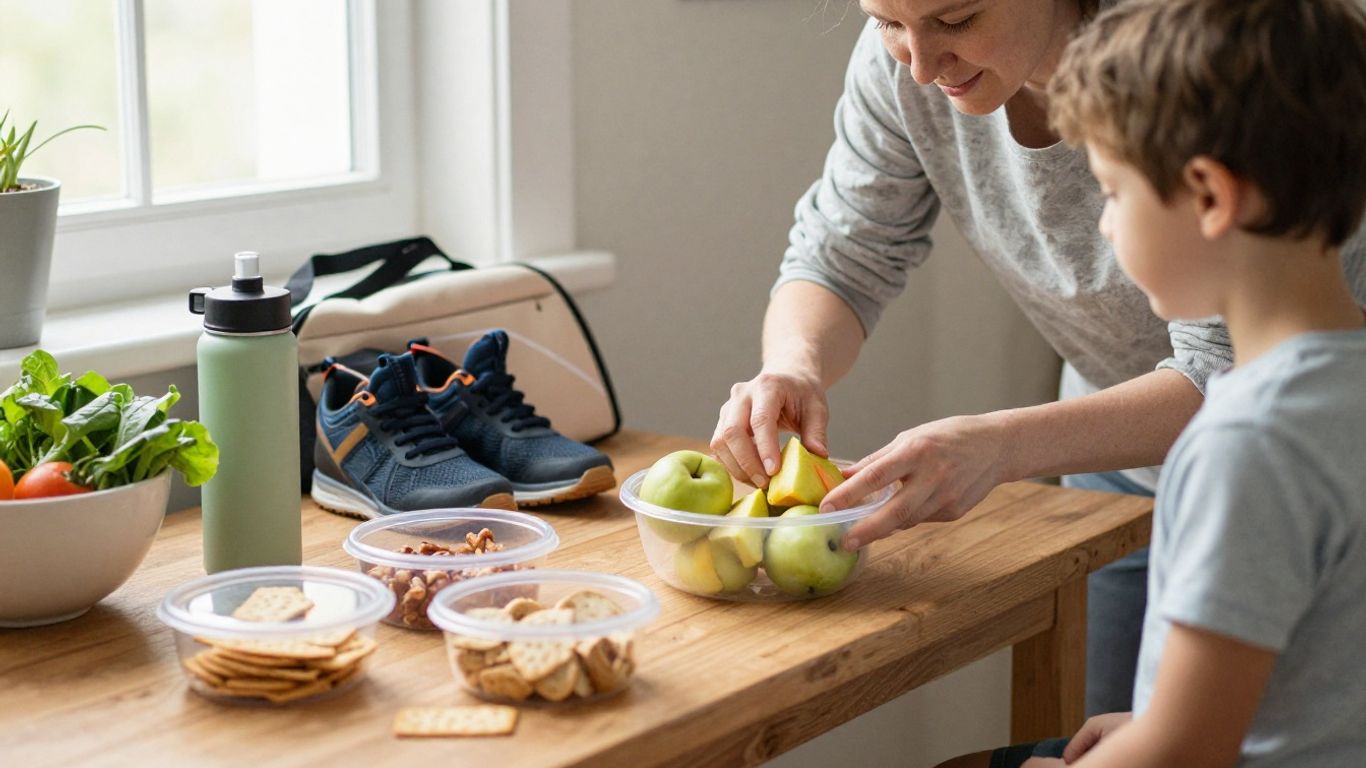
I like to keep a balance between fresh items, foods that feel substantial and snacks that are easy to carry. For sport days, I think about packaging and mess as well as what the kids will actually eat between activities. At home, there’s usually more freedom to serve something that needs a bowl or a little preparation. I plan for the setting first, then choose a snack to suit it.
Account for allergies and dietary preferences
I keep known allergies and family preferences in view before choosing ingredients or packing food to share. When a snack is for a team or group, I check what the organisers have asked families to consider rather than making assumptions. Labels and ingredients can change, so I read them when buying packaged foods. This is a practical planning step, not a substitute for individual guidance where that is needed.
Adjust portions for children and adults
I don’t treat one portion as right for every age or activity. The kids’ appetites vary, and so does the timing of the next meal, so I pack amounts that make sense for the day rather than relying on a fixed formula. I may bring an extra familiar option on a long outing, especially if we’ll be away from home for a while. The plan should help me prepare, not dictate exactly how much anyone must eat.
Include both homemade and store-bought snacks
Some weeks I have time to prepare snacks, and some weeks I don’t. Store-bought choices can fill a gap, while homemade options may use ingredients I already have or suit a family favourite. I find it helpful to plan for both, so a busy day doesn’t make the whole menu fall apart. Convenience is part of a workable routine, not a failure to plan.
How to build a practical snack menu
Once I know what the week looks like, I build a short menu that draws on seasonal ingredients and foods the family already recognises. I don’t try to make every day different; a repeat option can be welcome when it’s easy and reliably eaten. The menu is there to reduce decisions, not add pressure. I leave enough room for an unplanned stop at the shops or a change of heart.
Pair seasonal ingredients with familiar favorites
A new ingredient is easier to try when it appears beside something familiar. I might combine fruit that is in season with a snack the kids already like, or offer it in a familiar format such as a lunchbox portion. I don’t need to reinvent the whole menu to make the most of seasonal produce. One small change can be enough to keep things interesting.
Rotate flavors and textures to avoid repetition
I glance over the week and check whether every option feels much the same. If I have several soft or sweet snacks in a row, I can add something crisp or savoury, depending on what suits the family and the day. Variety doesn’t require a different recipe each time. Small changes in texture, flavour or how an ingredient is served can make a familiar menu feel less repetitive.
Plan simple substitutions when ingredients are unavailable
I write down a backup idea when a menu depends on produce that may not be easy to find. The point is to preserve the role of the snack—fresh, portable or quick to prepare—rather than insist on one exact ingredient. For example, if my first-choice fruit isn’t available, I can choose another option the family likes. That way, the plan stays useful even when the shop’s selection changes.
Set realistic limits on prep time
I’m more likely to follow a menu when it fits into the time I actually have. Before choosing a homemade option, I consider whether I can prepare it alongside ordinary meals or whether it needs more attention than the week allows. A short list of quick ideas can help me decide what to make and what to buy. For a busy week, I use a simple prep check:
- Choose one or two items that can be prepared ahead.
- Keep at least one snack that needs little or no preparation.
- Set aside a portable option for sport or travel days.
- Drop any prep task that no longer fits the week.
This gives me a workable starting point without turning snack preparation into a separate project. If the week gets crowded, I can scale back and rely on the easy options I already planned for.
How to organize shopping and preparation
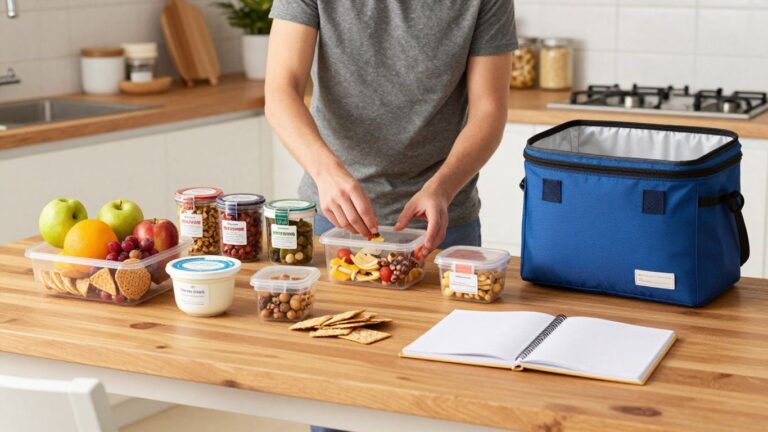
A menu is only helpful if I can turn it into a straightforward shop and a manageable amount of preparation. I check cupboards and the fridge before writing a list, because I’d rather use an ingredient I already have than buy another one. Then I think about what needs to be washed, portioned or packed and when I can do it. A few small steps make busy mornings feel less improvised.
Turn the snack menu into a shopping list
I work through the menu and note only the items we need, checking quantities against what is already at home. If an ingredient appears in more than one snack, I list it once and make sure the amount will cover both. I also leave some room for substitutions if a particular item is out of stock. The result is a list that follows the plan without treating it as unchangeable.
Group ingredients by store section or recipe
Grouping items can make the shop easier to navigate. I might list fresh produce together, then pantry items and anything that needs to be kept chilled, or group ingredients by the snack I intend to prepare. The best approach is whichever makes my own shopping trip simpler. I keep the list easy to scan, especially when I’m fitting the shop around school or sport commitments.
Prep produce and pantry items safely
Once I’m home, I put chilled items away promptly and follow the handling and storage directions for each food. I wash produce as appropriate before serving or preparing it, and use clean containers and utensils. I keep preparation within the time I have instead of trying to do everything in one session. A small, tidy prep routine is easier to repeat than a big weekend project.
Choose storage methods that preserve freshness
I use containers and storage arrangements suited to the food and how soon we’ll eat it. Some snacks are best packed just before leaving, while other ingredients can be portioned ahead and kept as directed. I label or place ready-to-use items where I’ll notice them, so they don’t disappear behind the leftovers. The simplest storage plan is one I can maintain during a busy week.
How to keep the planner useful over time
I treat the planner as a working note, not a record I have to keep perfect. After a week or two, I can see which ideas were easy to make, which were ignored and where the plan didn’t match our routine. A few quick observations help me make the next version more realistic. That matters more than filling every space on a page.
Track snacks people enjoy and make again
I mark the snacks that were eaten without fuss and note any that the kids ask for again. I also pay attention to when an option worked: a favourite at home may not travel well to a game, and vice versa. This gives me a personal list to draw from when I’m short on ideas. I don’t need elaborate ratings; a simple note is enough.
Review costs, leftovers, and food waste
At the end of the week, I look at what was used and what remained. If produce was repeatedly left untouched, I might buy less next time or try serving it differently. If a packaged item went unused, I can think about whether it belongs on the next list at all. These small checks help the plan reflect what our family actually eats.
Update the plan as seasons and schedules change
When the weather, school calendar or sport routine changes, I revisit the options that no longer fit. I swap ingredients based on local availability and adjust how many portable snacks we need. Some reliable favourites can stay on the list throughout the year; only a few details may need to change. Keeping the plan current is easier than rebuilding it from scratch each season.
Use a printable template or digital calendar
I use whichever format I’m most likely to check: a sheet on the fridge, a notebook or a calendar on my phone. A basic template can include the week, snack ideas, shopping notes and any preparation reminders. I keep it simple enough to update in a few minutes. If the planner starts to feel like homework, I trim it back until it serves the family again.